
By Corbin Dickfos – APA Sports & Exercise Physiotherapist at Performance Medicine
The traditional image of a dancer often emphasises elegance and flexibility and historically supplementary strength and conditioning faced resistance due to outdated stigmas. However, modern dance medicine increasingly recognises dancers as elite athletes. Today, integrating targeted resistance training is a fundamental requirement for performance optimisation, injury risk reduction, and career longevity.
The Artistic Athlete
Dance training places immense stress on the musculoskeletal system. It requires a unique blend of strength, power, control, and endurance. Whether stabilising a sustained arabesque or absorbing several times their body weight when landing a grand jeté, a dancer’s body must efficiently manage high physical forces. Like many athletes, dancers are required to produce force efficiently and absorb repetitive impact and load. Strength training enhances a dancer’s efficiency and capacity. A larger capacity improves tolerance to high rehearsal and performance loads.
Strength Without Size – Debunking Myths
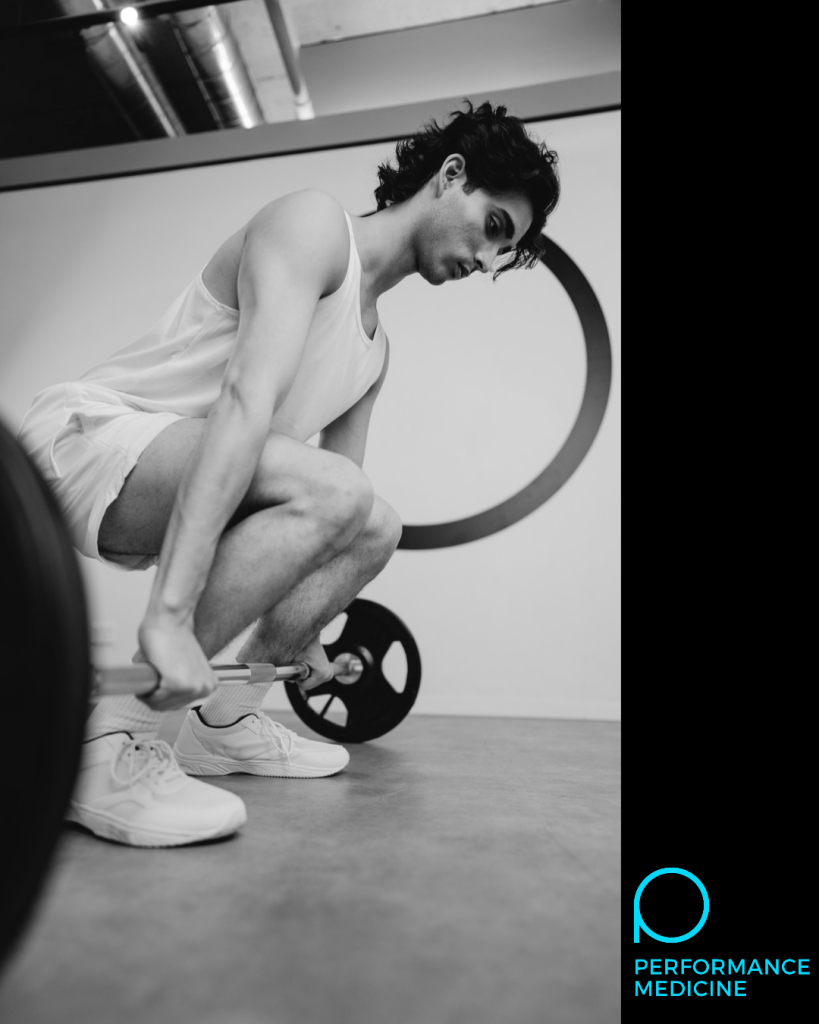
The most common myth is that lifting weights leads to unwanted muscle bulk (hypertrophy) and a subsequent loss of flexibility. In reality, muscle architecture is highly adaptable. Significant muscle growth requires high-volume training, specific nutritional surpluses, and genetic predispositions.
Dancers primarily benefit from low-volume, high-intensity neural training. This type of training improves the nervous system’s ability to recruit existing muscle fibres quickly, increasing power output without changing muscle size.
Resistance training through full range of motion actually improves active flexibility and eccentric control, helping dancers safely manage their mobility rather than relying on passive joint structures.
Reduced flexibility can often be secondary to weakness, not only tightness.
Performance Optimisation and Injury Risk Reduction
Different dance styles have varying demands, and in some environments the same repertoire of movements can be performed up to 10 times in a single week. These variables increase the risk of acute injuries such as sprains and strains, as well as overuse injuries including bone stress
and tendinopathies.
Strength training functions as a shield by addressing imbalances, improving tissue capacity and stabilising the joints. Strengthening the trunk, glutes, deep hip stabilisers, and calf shifts physical stress away from joints (ligaments and cartilage), improves tolerance to high load and reduces injury risk. A stronger muscle is a more efficient muscle.
By improving neuromuscular coordination, dancers optimise their movement patterns. This means less energy is expended on basic stabilisation, leaving a greater reserve of stamina, less fatigue-induced injury, and improved execution of more demanding sequences or complex
partner work.
Integrating Strength Training into a Dance Schedule
Strength training for dancers must consider a dancer’s style, weekly schedule, upcoming commitments, training load, injury history, and performance goals. Strength training should complement the stage or the studio, not impact the ability to perform. For most dancers, “in season”, two 45-minute sessions per week can provide an optimal stimulus without causing excessive fatigue. An accredited professional can adjust the training volume depending on the dance calendar. For example, building foundational strength during low-load dance periods, and transition to maintenance and power development during peak rehearsal and performance
periods. Compound movements (such as squats), single-leg work, calf conditioning, rotational core work (like the Pallof press), and upper-body exercises are all important components to a dance program.
The Takeaway Message
Strength training is a vital component for long-term health and athletic performance. Thoughtful programming builds physical resilience, reduces injury risk, and enhances career longevity. By developing foundational strength, dancers gain the control and physical capacity needed to empower their artistic expression and move with confidence.
Ausdance VIC members receive 10% off their assessment. Simply include your Ausdance VIC member number when booking to redeem the discount.